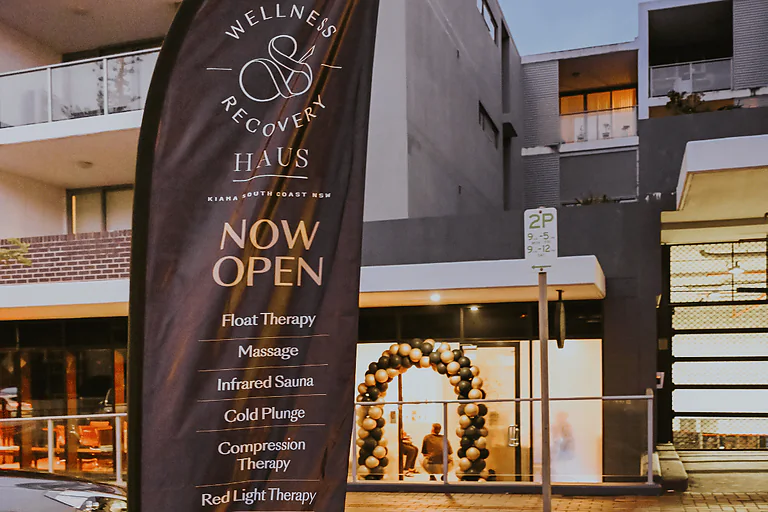
Float therapy during pregnancy provides weightless relief from postural pressure, back pain, and swollen joints. At Wellness & Recovery Haus in Kiama, pregnant clients float in Epsom salt-saturated water at body temperature, removing gravitational load from the spine and pelvis. Most practitioners recommend floating from the second trimester onward. Always consult your midwife or GP before booking.
As pregnancy progresses, the body redistributes weight rapidly. The pelvis tilts, the lumbar spine curves, and the hips widen to accommodate the growing uterus. This places sustained pressure on the sacroiliac joints, sciatic nerve, and lower back, often making comfortable rest difficult, especially in the third trimester.
Float therapy temporarily removes that gravitational load. With 500 kilograms of Epsom salt dissolved in the water, the solution is dense enough to support any body weight effortlessly. The spine decompresses. The pelvis floats in a neutral position. For many pregnant women, this is the only position in which they feel completely comfortable for an extended period.
Lower back and pelvic pain: gravity is removed from the spine and joints, allowing full decompression. Swollen ankles and feet: the horizontal position reduces fluid pooling, and Epsom salt supports circulation. Sleep disruption: the deep relaxation response supports melatonin production and sleep quality. Anxiety and stress: sensory reduction lowers cortisol, with research showing significant anxiety reduction after one session. Sciatic nerve discomfort: a neutral pelvic position reduces sciatic compression. General muscle tension: magnesium sulphate in the water may support muscle relaxation transdermally.
Float therapy is widely considered safe from the second trimester onward for low-risk pregnancies. The water temperature at Wellness & Recovery Haus is maintained at approximately 34.5 degrees Celsius, below the threshold associated with foetal heat stress. The salt water is not ingested. The tank is private, low-lit, and never locked.
First trimester floats are not recommended due to the elevated miscarriage risk in early pregnancy, regardless of cause. Women with high-risk pregnancies, preterm labour history, or placenta praevia should not float without specific medical clearance.
Note on magnesium absorption: Epsom salt float tanks contain magnesium sulphate. Some practitioners suggest transdermal magnesium absorption may support pregnancy health. The evidence for transdermal absorption specifically through float therapy is limited. Benefits should not be assumed beyond those of general relaxation and decompression.
Many pregnant clients at Wellness & Recovery Haus combine a float session with a pregnancy massage in the same visit. The recommended sequence is massage first, then float. The massage relaxes muscular tension and the float extends that state of decompression. Our pregnancy massage uses a specialised table to ensure comfort and safety throughout the session.
Most practitioners recommend the second trimester, after 12 weeks. Avoid floating in the first trimester as a precaution, regardless of low-risk status.
For most pregnancies, yes. Lying on your back in a neutral, fully supported position differs from lying on a firm surface where uterine weight can compress the vena cava. If you feel lightheaded at any point, simply roll to your side. The tank is private and you control the experience entirely.
Approximately 30 minutes south via the Princes Highway. We are located at Shop 8/65 Manning Street, Kiama, with street parking nearby.
Yes. Many clients book both services in sequence. Book the massage first, then the float. Allow at least 30 minutes between services.
Book a float therapy session in Kiama: https://wellnessrecoveryhaus.floathelm.com/booking