Rest tends to get treated as whatever is left over once everything else is done. Work, training, family, admin, and then, if there is time, rest. The evidence on stress and sleep in Australia suggests that ordering is working against most people, and that rest works better as something built into a week on purpose.
This is not a fringe issue. Safe Work Australia's 2024 workplace health and safety data recorded 14,600 accepted mental health workers' compensation claims in 2022–23, a 19.2 per cent rise on the previous year and a 97.3 per cent increase over the past decade. People with psychological injury claims are off work for a median period more than five times longer than the average across all injury and disease claims combined, which points to how significant the impact tends to be once stress reaches that point.
Separately, the 2020–2022 National Study of Mental Health and Wellbeing found that 17 per cent of Australians aged 16 to 85 experienced high or very high psychological distress, and 22 per cent, around 4.3 million people, experienced a mental disorder in the previous 12 months. These are national baseline figures, not a description of anyone in particular, but they make one thing clear: managing stress and building in genuine rest is a mainstream concern, not an indulgence reserved for people already in crisis.
The relationship between stress and sleep runs in both directions. The Sleep Health Foundation notes that poor sleep and depression are closely linked, and that treating one frequently improves the other, citing research indicating that between 60 and 90 per cent of people with depression also experience insomnia. During sleep, the brain processes the day's information and consolidates memory, which is part of why chronic sleep disruption is associated with more negative thinking, reduced emotional resilience, and greater vulnerability to stress and anxiety over time. A good night's sleep, in the foundation's words, helps foster both mental and emotional resilience, the capacity to manage life's ordinary difficulties without being knocked flat by them.
None of this means a single bad night is a crisis. It means that sleep and stress reinforce each other, for better or worse, which is exactly why addressing one in isolation, without touching the other, tends to be a slower path back to feeling like yourself.
The instinct when overwhelmed is often to simply do less, and stop there. Genuine rest is closer to an active state than a passive one. It involves deliberately downregulating a nervous system that has been running in a heightened state, not just removing tasks from a calendar. This is the thinking behind the studio's approach to recovery: small, consistent moments, rather than one dramatic reset, tend to be what actually shifts how a stretch of weeks feels.
None of the studio's modalities are a treatment for stress, anxiety, or any diagnosed condition, and none are positioned as one. What they are designed to support is the physical side of downregulation, the part of stress that shows up as a tight jaw, a racing mind at 11pm, or a body that will not settle even when there is finally time to.
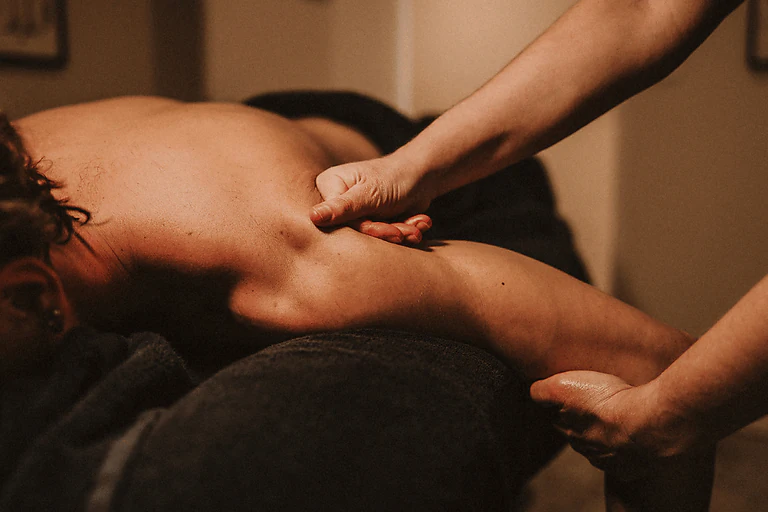
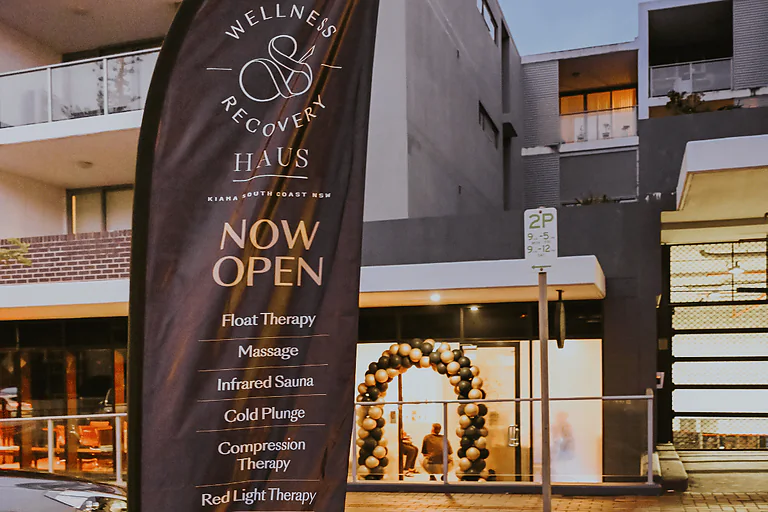
Magnesium Float Therapy removes sound, light, and effort entirely for an hour, giving an overstimulated nervous system a rare, complete break. Clearlight® Infrared Sauna supports a slower, more meditative wind-down through gentle heat. Massage, remedial, therapeutic, or simply a still hour with hands-on care, addresses the physical tension that stress accumulates in the body over weeks without anyone noticing. Oxygen & Hydrogen Therapy by AirPod Hydroxy® offers a quiet, seated hour for guests who want a passive recovery option without a physical modality attached to it.
None of these replace sleep, and none replace professional support when stress has moved beyond what rest alone can address. They are designed to support the general, everyday side of recovery, the small consistent moments the brand keeps coming back to, not a fix for a specific condition.
Some stress responds well to rest, routine, and small consistent moments of genuine downtime. Some does not, and that distinction matters. If stress, low mood, or sleep disruption is persistent, severe, or affecting daily functioning, that is a conversation for a GP or a registered psychologist, not something a float or a sauna session is designed to resolve. Beyond Blue (1300 22 4636) and Lifeline (13 11 14) are both available for anyone who needs to talk to someone now. Recovery modalities sit alongside professional care, not in place of it.
As covered in our piece on recovery myths, habit-formation research suggests a new behaviour takes an average of 66 days to become automatic, with a wide range either side depending on the person. Rest works on a similar timeline. A single session can feel noticeably good. The steadier, compounding benefit, better sleep, more even stress response, a body that settles more easily, tends to come from returning regularly rather than waiting for a bad week to justify it.
No. These modalities are designed to support general relaxation and downregulation, not to treat, diagnose, or replace care for a diagnosed condition. For persistent or significant stress, speak with a GP or psychologist.
There is no fixed answer, but many guests find a standing weekly session, similar to a regular training slot or appointment, easier to sustain than an occasional one booked only when things feel bad.
No. Most guests are managing the ordinary accumulated load of work, sleep, and everyday life, not a diagnosed condition.
Float and infrared sauna are the most common starting points for stress and sleep specifically. The team can talk through options based on what you're finding hardest, whether that's switching off, physical tension, or sleep itself.
Beyond Blue (1300 22 4636) and Lifeline (13 11 14) are both available, along with your GP as a first point of contact for ongoing support.
Float therapy is the modality most directly associated with sleep support, both through sensory deprivation and the magnesium absorbed through the skin, though many guests find infrared sauna helps as part of an evening wind-down too.
Book a session at Wellness & Recovery Haus, Shop 8/65 Manning St, Kiama NSW 2533, at wellnessrecoveryhaus.floathelm.com/booking.